Diabetes mellitus (
DM), commonly referred to as
diabetes, is a group of
metabolic diseases in which there are
high blood sugar levels over a prolonged period.
[2] Symptoms of high blood sugar include frequent urination, increased thirst, and increased hunger. If left untreated, diabetes can cause many complications.
[3] Acute complications can include
diabetic ketoacidosis,
nonketotic hyperosmolar coma, or death.
[4] Serious long-term complications include
heart disease,
stroke,
chronic kidney failure,
foot ulcers, and damage to the eyes
Diabetes is due to either the
pancreas not producing enough
insulin or the cells of the body not responding properly to the insulin produced.
[5] There are three main types of diabetes mellitus:
- Type 1 DM results from the pancreas's failure to produce enough insulin. This form was previously referred to as "insulin-dependent diabetes mellitus" (IDDM) or "juvenile diabetes". The cause is unknown.[3]
- Type 2 DM begins with insulin resistance, a condition in which cells fail to respond to insulin properly.[3] As the disease progresses a lack of insulin may also develop.[6] This form was previously referred to as "non insulin-dependent diabetes mellitus" (NIDDM) or "adult-onset diabetes". The most common cause is excessive body weight and not enough exercise.[3]
- Gestational diabetes is the third main form and occurs when pregnant women without a previous history of diabetes develop high blood sugar levels.[3]
Prevention and treatment involve maintaining a healthy diet, regular physical exercise, a normal body weight, and avoiding use of tobacco. Control of blood pressure and maintaining proper foot care are important for people with the disease. Type 1 DM must be managed with insulin injections.
[3] Type 2 DM may be treated with medications with or without insulin.
[7] Insulin and some oral medications can cause
low blood sugar.
[8] Weight loss surgery in those with
obesity is sometimes an effective measure in those with type 2 DM.
[9] Gestational diabetes usually resolves after the birth of the baby.
[10]
As of 2015, an estimated 415 million people had diabetes worldwide,
[11] with type 2 DM making up about 90% of the cases.
[12][13]This represents 8.3% of the adult population,
[13] with equal rates in both women and men.
[14] As of 2014, trends suggested the rate would continue to rise.
[15] Diabetes at least doubles a person's risk of early death.
[3] From 2012 to 2015, approximately 1.5 to 5.0 million deaths each year resulted from diabetes.
[7][11] The global economic cost of diabetes in 2014 was estimated to be
US$612 billion.
[16] In the United States, diabetes cost $245 billion in 2012.
[17]
Signs and symptoms
The classic symptoms of untreated diabetes are weight loss,
polyuria (increased urination),
polydipsia (increased thirst), and
polyphagia (increased hunger).
[18] Symptoms may develop rapidly (weeks or months) in type 1 DM, while they usually develop much more slowly and may be subtle or absent in type 2 DM.
Several other signs and symptoms can mark the onset of diabetes although they are not specific to the disease. In addition to the known ones above, they include blurry vision, headache,
fatigue, slow healing of cuts, and itchy skin. Prolonged high blood glucose can cause glucose absorption in the
lens of the eye, which leads to changes in its shape, resulting in vision changes. A number of skin rashes that can occur in diabetes are collectively known as
diabetic dermadromes.
[citation needed]
Diabetic emergencies
Low blood sugar is common in persons with type 1 and type 2 DM. Most cases are mild and are not considered medical emergencies. Effects can range from
feelings of unease,
sweating, trembling, and increased appetite in mild cases to more serious issues such as
confusion, changes in behavior such as aggressiveness,
seizures,
unconsciousness, and (rarely) permanent
brain damage or
death in severe cases.
[19][20] Moderate hypoglycemia may easily be mistaken for drunkenness;
[21] rapid breathing and sweating, cold, pale skin are characteristic of hypoglycemia but not definitive.
[22] Mild to moderate cases are self-treated by eating or drinking something high in sugar. Severe cases can lead to unconsciousness and must be treated with intravenous glucose or
injections with glucagon.
[citation needed]
Complications
All forms of diabetes increase the risk of long-term complications. These typically develop after many years (10–20) but may be the first symptom in those who have otherwise not received a diagnosis before that time.
The primary complications of diabetes due to damage in small blood vessels include damage to the eyes, kidneys, and nerves.
[26] Damage to the eyes, known as
diabetic retinopathy, is caused by damage to the blood vessels in the
retina of the eye, and can result in gradual vision loss and
blindness.
[26] Damage to the kidneys, known as
diabetic nephropathy, can lead to tissue scarring, urine protein loss, and eventually
chronic kidney disease, sometimes requiring
dialysis or
kidney transplant.
[26] Damage to the nerves of the body, known as
diabetic neuropathy, is the most common complication of diabetes.
[26] The symptoms can include numbness, tingling, pain, and altered pain sensation, which can lead to damage to the skin.
Diabetes-related foot problems (such as
diabetic foot ulcers) may occur, and can be difficult to treat, occasionally requiring
amputation. Additionally,
proximal diabetic neuropathy causes painful
muscle wasting and weakness.
There is a link between
cognitive deficit and diabetes. Compared to those without diabetes, those with the disease have a 1.2 to 1.5-fold greater rate of decline in cognitive function.
[27] Being diabetic, especially when on insulin increases the risk of falls in older people.
[28]
Causes
Comparison of type 1 and 2 diabetes[12]
| Feature | Type 1 diabetes | Type 2 diabetes |
|---|
| Onset | Sudden | Gradual |
|---|
| Age at onset | Mostly in children | Mostly in adults |
|---|
| Body size | Thin or normal[29] | Often obese |
|---|
| Ketoacidosis | Common | Rare |
|---|
| Autoantibodies | Usually present | Absent |
|---|
| Endogenous insulin | Low or absent | Normal, decreased
or increased |
|---|
Concordance
in identical twins | 50% | 90% |
|---|
| Prevalence | ~10% | ~90% |
|---|
Diabetes mellitus is classified into four broad categories:
type 1,
type 2,
gestational diabetes, and "other specific types".
[5] The "other specific types" are a collection of a few dozen individual causes.
[5] Diabetes is a more variable disease than once thought and people may have combinations of forms.
[30] The term "diabetes", without qualification, usually refers to diabetes mellitus.
Type 1
Type 1 diabetes mellitus is characterized by loss of the insulin-producing
beta cells of the
islets of Langerhans in the pancreas, leading to insulin deficiency. This type can be further classified as immune-mediated or idiopathic. The majority of type 1 diabetes is of the immune-mediated nature, in which a
T-cell-mediated
autoimmune attack leads to the loss of beta cells and thus insulin.
[31] It causes approximately 10% of diabetes mellitus cases in North America and Europe. Most affected people are otherwise healthy and of a healthy weight when onset occurs. Sensitivity and responsiveness to insulin are usually normal, especially in the early stages. Type 1 diabetes can affect children or adults, but was traditionally termed "juvenile diabetes" because a majority of these diabetes cases were in children.
[citation needed]
"Brittle" diabetes, also known as unstable diabetes or labile diabetes, is a term that was traditionally used to describe the dramatic and recurrent swings in
glucose levels, often occurring for no apparent reason in
insulin-dependent diabetes. This term, however, has no biologic basis and should not be used.
[32] Still, type 1 diabetes can be accompanied by irregular and unpredictable
high blood sugar levels, frequently with
ketosis, and sometimes with serious
low blood sugar levels. Other complications include an impaired counterregulatory response to low blood sugar, infection,
gastroparesis (which leads to erratic absorption of dietary carbohydrates), and endocrinopathies (e.g.,
Addison's disease).
[32] These phenomena are believed to occur no more frequently than in 1% to 2% of persons with type 1 diabetes.
[33]
Type 1 diabetes is partly inherited, with multiple genes, including certain
HLA genotypes, known to influence the risk of diabetes. The increase of incidence of type 1 diabetes reflects the modern lifestyle.
[34] In genetically susceptible people, the onset of diabetes can be triggered by one or more environmental factors,
[35] such as a viral infection or diet. Several viruses have been implicated, but to date there is no stringent evidence to support this hypothesis in humans.
[35][36] Among dietary factors, data suggest that
gliadin (a protein present in
gluten) may play a role in the development of type 1 diabetes, but the mechanism is not fully understood.
[37][38]
Type 2
Type 2 DM is characterized by
insulin resistance, which may be combined with relatively reduced insulin secretion.
[5] The defective responsiveness of body tissues to insulin is believed to involve the
insulin receptor. However, the specific defects are not known. Diabetes mellitus cases due to a known defect are classified separately. Type 2 DM is the most common type of diabetes mellitus.
[citation needed]
In the early stage of type 2, the predominant abnormality is reduced insulin sensitivity. At this stage, high blood sugar can be reversed by a variety of measures and
medications that improve insulin sensitivity or reduce the
liver's glucose production.
Type 2 DM is due primarily to lifestyle factors and genetics.
[39] A number of lifestyle factors are known to be important to the development of type 2 DM, including
obesity (defined by a
body mass index of greater than 30), lack of physical activity, poor diet, stress, and
urbanization.
[12] Excess body fat is associated with 30% of cases in those of Chinese and Japanese descent, 60–80% of cases in those of European and African descent, and 100% of Pima Indians and Pacific Islanders.
[5] Even those who are not obese often have a high
waist–hip ratio.
[5]
Gestational diabetes mellitus (GDM) resembles type 2 DM in several respects, involving a combination of relatively inadequate insulin secretion and responsiveness. It occurs in about 2–10% of all
pregnancies and may improve or disappear after delivery.
[44] However, after pregnancy approximately 5–10% of women with gestational diabetes are found to have diabetes mellitus, most commonly type 2.
[44] Gestational diabetes is fully treatable, but requires careful medical supervision throughout the pregnancy. Management may include dietary changes, blood glucose monitoring, and in some cases, insulin may be required.
Maturity onset diabetes of the young
Maturity onset diabetes of the young an
autosomal dominant inherited form of diabetes, due to one of several single-gene mutations causing defects in insulin production.
[45] It is significantly less common than the three main types. The name of this disease refers to early hypotheses as to its nature. Being due to a defective gene, this disease varies in age at presentation and in severity according to the specific gene defect; thus there are at least 13 subtypes of MODY. People with MODY often can control it without using insulin.
Other types
Prediabetes indicates a condition that occurs when a person's blood glucose levels are higher than normal but not high enough for a diagnosis of type 2 DM. Many people destined to develop type 2 DM spend many years in a state of prediabetes.
Latent autoimmune diabetes of adults (LADA) is a condition in which type 1 DM develops in adults. Adults with LADA are frequently initially misdiagnosed as having type 2 DM, based on age rather than cause.
Some cases of diabetes are caused by the body's tissue receptors not responding to insulin (even when insulin levels are normal, which is what separates it from type 2 diabetes); this form is very uncommon. Genetic mutations (
autosomal or
mitochondrial) can lead to defects in
beta cell function. Abnormal insulin action may also have been genetically determined in some cases. Any disease that causes extensive damage to the
pancreas may lead to diabetes (for example,
chronic pancreatitis and
cystic fibrosis). Diseases associated with excessive secretion of
insulin-antagonistic hormones can cause diabetes (which is typically resolved once the hormone excess is removed). Many drugs impair insulin secretion and some toxins damage pancreatic beta cells. The
ICD-10 (1992) diagnostic entity,
malnutrition-related diabetes mellitus (MRDM or MMDM, ICD-10 code E12), was deprecated by the
World Health Organization when the current taxonomy was introduced in 1999.
[46]
"Type 3 diabetes" has been suggested as a term for
Alzheimer's disease as the underlying processes may involve insulin resistance by the brain.
[47]
The following is a comprehensive list of other causes of diabetes
- Genetic defects of β-cell function
- Genetic defects in insulin processing or insulin action
- Defects in proinsulin conversion
- Insulin gene mutations
- Insulin receptor mutations
- Exocrine pancreatic defects
|
|
Pathophysiology

The fluctuation of blood sugar (red) and the sugar-lowering hormone
insulin (blue) in humans during the course of a day with three meals — one of the effects of a
sugar-rich vs a
starch-rich meal is highlighted.

Mechanism of insulin release in normal pancreatic beta cells — insulin production is more or less constant within the beta cells. Its release is triggered by food, chiefly food containing absorbable glucose.
Insulin is the principal hormone that regulates the uptake of
glucose from the blood into most cells of the body, especially liver, adipose tissue and muscle, except smooth muscle, in which insulin acts via the
IGF-1. Therefore, deficiency of insulin or the insensitivity of its
receptors plays a central role in all forms of diabetes mellitus.
[50]
The body obtains glucose from three main places: the intestinal absorption of food; the breakdown of
glycogen, the storage form of glucose found in the liver; and
gluconeogenesis, the generation of glucose from non-carbohydrate substrates in the body.
[51] Insulin plays a critical role in balancing glucose levels in the body. Insulin can inhibit the breakdown of glycogen or the process of gluconeogenesis, it can stimulate the transport of glucose into fat and muscle cells, and it can stimulate the storage of glucose in the form of glycogen.
[51]
Insulin is released into the blood by
beta cells (β-cells), found in the
islets of Langerhans in the pancreas, in response to rising levels of blood glucose, typically after eating. Insulin is used by about two-thirds of the body's cells to absorb glucose from the blood for use as fuel, for conversion to other needed molecules, or for storage. Lower glucose levels result in decreased insulin release from the beta cells and in the breakdown of glycogen to glucose. This process is mainly controlled by the hormone
glucagon, which acts in the opposite manner to insulin.
[52]
If the amount of insulin available is insufficient, if cells respond poorly to the effects of insulin (
insulin insensitivity or
insulin resistance), or if the insulin itself is defective, then glucose will not be absorbed properly by the body cells that require it, and it will not be stored appropriately in the liver and muscles. The net effect is persistently high levels of blood glucose, poor protein synthesis, and other metabolic derangements, such as
acidosis.
[51]
When the glucose concentration in the blood remains high over time, the
kidneys will reach a threshold of
reabsorption, and glucose will be excreted in the
urine (
glycosuria).
[53] This increases the
osmotic pressure of the urine and inhibits reabsorption of water by the kidney, resulting in increased urine production (
polyuria) and increased fluid loss. Lost blood volume will be replaced osmotically from water held in body cells and other body compartments, causing
dehydration and increased thirst (
polydipsia)
Diagnosis
| Condition | 2 hour glucose | Fasting glucose | HbA1c |
|---|
| Unit | mmol/l(mg/dl) | mmol/l(mg/dl) | mmol/mol | DCCT % |
| Normal | <7.8 (<140) | <6.1 (<110) | <42 | <6.0 |
| Impaired fasting glycaemia | <7.8 (<140) | ≥6.1(≥110) & <7.0(<126) | 42-46 | 6.0–6.4 |
| Impaired glucose tolerance | ≥7.8 (≥140) | <7.0 (<126) | 42-46 | 6.0–6.4 |
| Diabetes mellitus | ≥11.1 (≥200) | ≥7.0 (≥126) | ≥48 | ≥6.5 |
A positive result, in the absence of unequivocal high blood sugar, should be confirmed by a repeat of any of the above methods on a different day. It is preferable to measure a fasting glucose level because of the ease of measurement and the considerable time commitment of formal glucose tolerance testing, which takes two hours to complete and offers no prognostic advantage over the fasting test.
[57] According to the current definition, two fasting glucose measurements above 126 mg/dl (7.0 mmol/l) is considered diagnostic for diabetes mellitus.
Per the
World Health Organization people with fasting glucose levels from 6.1 to 6.9 mmol/l (110 to 125 mg/dl) are considered to have
impaired fasting glucose.
[58] people with plasma glucose at or above 7.8 mmol/l (140 mg/dl), but not over 11.1 mmol/l (200 mg/dl), two hours after a 75 g oral glucose load are considered to have
impaired glucose tolerance. Of these two prediabetic states, the latter in particular is a major risk factor for progression to full-blown diabetes mellitus, as well as cardiovascular disease.
[59] The
American Diabetes Association since 2003 uses a slightly different range for impaired fasting glucose of 5.6 to 6.9 mmol/l (100 to 125 mg/dl).
[60]
There is no known preventive measure for type 1 diabetes.
[3] Type 2 diabetes — which accounts for 85-90% of all cases — can often be prevented or delayed by maintaining a
normal body weight, engaging in physical exercise, and consuming a healthful diet.
[3] Higher levels of physical activity (more than 90 minutes per day) reduce the risk of diabetes by 28%.
[62] Dietary changes known to be effective in helping to prevent diabetes include maintaining a diet rich in
whole grains and
fiber, and choosing good fats, such as the
polyunsaturated fats found in nuts, vegetable oils, and fish.
[63] Limiting sugary beverages and eating less red meat and other sources of
saturated fat can also help prevent diabetes.
[63] Tobacco smoking is also associated with an increased risk of diabetes and its complications, so
smoking cessation can be an important preventive measure as well.
[64]
The relationship between type 2 diabetes and the main modifiable risk factors (excess weight, unhealthy diet, physical inactivity and tobacco use) is similar in all regions of the world. There is growing evidence that the underlying determinants of diabetes are a reflection of the major forces driving social, economic and cultural change: globalization, urbanization, population aging, and the general
health policy environment.
[65]
Management
Learning about the disease and actively participating in the treatment is important, since complications are far less common and less severe in people who have well-managed blood sugar levels.
[67][68] The goal of treatment is an HbA
1C level of 6.5%, but should not be lower than that, and may be set higher.
[69] Attention is also paid to other health problems that may accelerate the negative effects of diabetes. These include
smoking,
elevated cholesterol levels,
obesity,
high blood pressure, and lack of regular
exercise.
[Specialized footwear is widely used to reduce the risk of ulceration, or re-ulceration, in at-risk diabetic feet. Evidence for the efficacy of this remains equivocal, however.Diabetes mellitus is a
chronic disease, for which there is no known cure except in very specific situations.
[66] Management concentrates on keeping blood sugar levels as close to normal, without causing low blood sugar. This can usually be accomplished with a healthy diet, exercise, weight loss, and use of appropriate medications (insulin in the case of type 1 diabetes; oral medications, as well as possibly insulin, in type 2 diabetes).
[citation needed]
Lifestyle
People with diabetes can benefit from education about the disease and treatment, good
nutrition to achieve a normal body weight, and exercise, with the goal of keeping both short-term and long-term blood glucose levels
within acceptable bounds. In addition, given the associated higher risks of cardiovascular disease, lifestyle modifications are recommended to control blood pressure.
[71]
Medications used to treat diabetes do so by lowering
blood sugar levels. There are a number of different classes of anti-diabetic medications. Some are available by mouth, such as
metformin, while others are only available by injection such as
GLP-1 agonists. Type 1 diabetes can only be treated with insulin, typically with a combination of regular and NPH
insulin, or synthetic
insulin analogs.
Metformin is generally recommended as a first line treatment for type 2 diabetes, as there is good evidence that it decreases mortality.
[72] It works by decreasing the liver's production of glucose.
[73] Several other groups of drugs, mostly given by mouth, may also decrease blood sugar in type II DM. These include agents that increase insulin release, agents that decrease absorption of sugar from the intestines, and agents that make the body more sensitive to insulin.
[73] When insulin is used in type 2 diabetes, a long-acting formulation is usually added initially, while continuing oral medications.
[72] Doses of insulin are then increased to effect.Since
cardiovascular disease is a serious complication associated with diabetes, some have recommended blood pressure levels below 130/80 mmHg.
[75] However, evidence supports less than or equal to somewhere between 140/90 mmHg to 160/100 mmHg; the only additional benefit found for blood pressure targets beneath this range was an isolated decrease in stroke risk, and this was accompanied by an increased risk of other serious adverse events.
[76][77] A 2016 review found potential harm to treating lower than 140 mmHg.
[78] Among
medications that lower blood pressure,
angiotensin converting enzyme inhibitors (ACEIs) improve outcomes in those with DM while the similar medications
angiotensin receptor blockers (ARBs) do not.
[79] Aspirin is also recommended for people with cardiovascular problems, however routine use of aspirin has not been found to improve outcomes in uncomplicated diabetes.
Surgery
Weight loss surgery in those with
obesity and type two diabetes is often an effective measure.
[82] Many are able to maintain normal blood sugar levels with little or no medications following surgery
[83] and long-term mortality is decreased.
[84] There however is some short-term mortality risk of less than 1% from the surgery.
[85] The
body mass index cutoffs for when surgery is appropriate are not yet clear.
[84] It is recommended that this option be considered in those who are unable to get both their weight and blood sugar under control.
[86]
Support
In countries using a
general practitioner system, such as the
United Kingdom, care may take place mainly outside hospitals, with hospital-based specialist care used only in case of complications, difficult blood sugar control, or research projects. In other circumstances, general practitioners and specialists share care in a team approach. Home
telehealth support can be an effective management technique.
[87]
Epidemiology

Rates of diabetes worldwide in 2000 (per 1,000 inhabitants) — world average was 2.8%.
no data
≤ 7.5
7.5–15
15–22.5
22.5–30
30–37.5
37.5–45
|
45–52.5
52.5–60
60–67.5
67.5–75
75–82.5
≥ 82.5
|
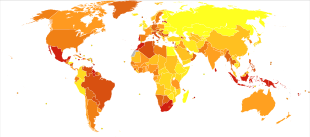
Diabetes mellitus deaths per million persons in 2012
28-91
92-114
115-141
142-163
164-184
185-209
210-247
248-309
310-404
405-1879
As of 2016, 422 million people have diabetes worldwide,
[ up from an estimated 382 million people in 2013
[13] and from 108 million in 1980.
[] Accounting for the shifting age structure of the global population, the prevalence of diabetes is 8.5% among adults, nearly double the rate of 4.7% in 1980.
[88] Type 2 makes up about 90% of the cases.
[12][14] Some data indicate rates are roughly equal in women and men,
[14] but male excess in diabetes has been found in many populations with higher type 2 incidence, possibly due to sex-related differences in insulin sensitivity, consequences of obesity and regional body fat deposition, and other contributing factors such as high blood pressure, tobacco smoking, and alcohol inta
The
World Health Organization (WHO) estimates that diabetes mellitus resulted in 1.5 million deaths in 2012, making it the 8th leading cause of death.
[7][88] However another 2.2 million deaths worldwide were attributable to high blood glucose and the increased risks of cardiovascular disease and other associated complications (e.g. kidney failure), which often lead to premature death and are often listed as the underlying cause on death certificates rather than diabetes. For example, in 2014, the
International Diabetes Federation (IDF) estimated that diabetes resulted in 4.9 million deaths worldwide,
[15]using modeling to estimate the total amount of deaths that could be directly or indirectly attributed to diabetes.
[16]
Diabetes mellitus occurs throughout the world but is more common (especially type 2) in more developed countries. The greatest increase in rates has however been seen in low- and middle-income countries,
] where more than 80% of diabetic deaths occurThe fastest prevalence increase is expected to occur in Asia and Africa, where most people with diabetes will probably live in 2030 The increase in rates in developing countries follows the trend of urbanization and lifestyle changes, including increasingly sedentary lifestyles, less physically demanding work and the global nutrition transition, marked by increased intake of foods that are high energy-dense but nutrient-poor (often high in sugar and saturated fats, sometimes referred to as the "Western-style" diet).
History
Diabetes was one of the first diseases described
] with an Egyptian manuscript from
c. 1500
BCE mentioning "too great emptying of the urine".
[95] The
Ebers papyrus includes a recommendation for a drink to be taken in such cases.
[96] The first described cases are believed to be of type 1 diabetes Indian physicians around the same time identified the disease and classified it as
madhumeha or "honey urine", noting the urine would attract ants.
The term "diabetes" or "to pass through" was first used in 230 BCE by the Greek
Apollonius of Memphis.
[95] The disease was considered rare during the time of the
Roman empire, with
Galen commenting he had only seen two cases during his career.
[95] This is possibly due to the diet and lifestyle of the ancients, or because the clinical symptoms were observed during the advanced stage of the disease. Galen named the disease "diarrhea of the urine" (diarrhea urinosa).
[97]
The earliest surviving work with a detailed reference to diabetes is that of
Aretaeus of Cappadocia (2nd or early 3rd century CE). He described the symptoms and the course of the disease, which he attributed to the moisture and coldness, reflecting the beliefs of the "Pneumatic School". He hypothesized a correlation of diabetes with other diseases and he discussed differential diagnosis from the snakebite which also provokes excessive thirst. His work remained unknown in the West until 1552, when the first Latin edition was published in Venice.
[97]
Type 1 and type 2 diabetes were identified as separate conditions for the first time by the Indian physicians
Sushruta and
Charaka in 400-500 CE with type 1 associated with youth and type 2 with being overweight.
[95] The term "mellitus" or "from honey" was added by the Briton John Rolle in the late 1700s to separate the condition from
diabetes insipidus, which is also associated with frequent urination.
[95] Effective treatment was not developed until the early part of the 20th century, when Canadians
Frederick Banting and
Charles Herbert Best isolated and purified insulin in 1921 and 1922.
[] This was followed by the development of the long-acting insulin NPH in the 1940s.
Etymology
The word
diabetes comes from
Latin diabētēs, which in turn comes from
Ancient Greek διαβήτης (
diabētēs) which literally means "a passer through; a
siphonAncient Greek physician Aretaeus of Cappadocia (
fl. 1st century
CE) used that word, with the intended meaning "excessive discharge of urine", as the name for the disease. Ultimately, the word comes from Greek διαβαίνειν (
diabainein), meaning "to pass through which is composed of δια- (
dia-), meaning "through" and βαίνειν (
bainein), meaning "to go". The word "diabetes" is first recorded in English, in the form
diabete, in a medical text written around 1425.
The word
mellitus (
or
) comes from the classical Latin word
mellītus, meaning "mellite"
[101] (i.e. sweetened with honey;
[101] honey-sweet
[102]). The Latin word comes from
mell-, which comes from
mel, meaning "honey";
[101][102] sweetness;
[102] pleasant thing,
[102] and the suffix -
ītus,
[101] whose meaning is the same as that of the English suffix "-ite".
[103] It was
Thomas Willis who in 1675 added "mellitus" to the word "diabetes" as a designation for the disease, when he noticed the urine of a diabetic had a sweet taste (
glycosuria). This sweet taste had been noticed in urine by the ancient Greeks, Chinese, Egyptians, Indians, and Persians.
Society and culture
The 1989 "
St. Vincent Declaration"was the result of international efforts to improve the care accorded to those with diabetes. Doing so is important not only in terms of quality of life and life expectancy but also economically—expenses due to diabetes have been shown to be a major drain on health—and productivity-related resources for healthcare systems and governments.
Several countries established more and less successful national diabetes programmes to improve treatment of the disease.
[106]
People with diabetes who have neuropathic symptoms such as
numbness or tingling in feet or hands are twice as likely to be
unemployed as those without the symptoms.
[107]
In 2010, diabetes-related emergency room (ER) visit rates in the United States were higher among people from the lowest income communities (526 per 10,000 population) than from the highest income communities (236 per 10,000 population). Approximately 9.4% of diabetes-related ER visits were for the uninsured.
[108]
Naming
The term "type 1 diabetes" has replaced several former terms, including childhood-onset diabetes, juvenile diabetes, and insulin-dependent diabetes mellitus (IDDM). Likewise, the term "type 2 diabetes" has replaced several former terms, including adult-onset diabetes, obesity-related diabetes, and noninsulin-dependent diabetes mellitus (NIDDM). Beyond these two types, there is no agreed-upon standard nomenclature
Diabetes mellitus is also occasionally known as "sugar diabetes" to differentiate it from diabetes insipidus.
[
Other animals
In animals, diabetes is most commonly encountered in dogs and cats. Middle-aged animals are most commonly affected. Female dogs are twice as likely to be affected as males, while according to some sources, male cats are also more prone than females. In both species, all breeds may be affected, but some small dog breeds are particularly likely to develop diabetes, such as
Miniature Poodles.
[110] The symptoms may relate to fluid loss and polyuria, but the course may also be insidious. Diabetic animals are more prone to infections. The long-term complications recognized in humans are much rarer in animals. The principles of treatment (weight loss, oral antidiabetics, subcutaneous insulin) and management of emergencies (e.g. ketoacidosis) are similar to those in humans
DIABETES PREVENTION PROGRAMME